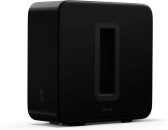
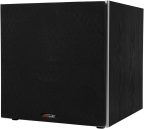
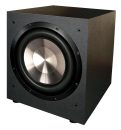
The question comes up constantly, usually from people who want the bass but not the visual footprint of a sub sitting out in the room. Here’s what actually happens when you enclose a sub in a cabinet — and some better alternatives.
What a Cabinet Does to Your Sub
Restricts port airflow (ported subs): Ported subwoofers need air to move freely in and out of the port. A closed cabinet prevents this. The port effectively stops working, bass output drops significantly, and the bass character changes in unpredictable ways as the cabinet interior creates its own acoustic resonances.
Traps heat: Powered subwoofer amplifiers generate heat — sometimes quite a bit at higher volumes. An enclosed cabinet prevents heat dissipation. This triggers protection shutdowns during long listening sessions and accelerates component aging over time.
Creates cabinet resonances: The entertainment unit is not acoustically designed. At certain bass frequencies, its panels will resonate and vibrate, adding unwanted colorations to the bass and often producing audible rattles.
Reduces output: All of the above combine to meaningfully reduce the bass output you actually hear. You’ve paid for a sub that can do X and you’re getting 0.6X because of where you put it.
When It’s Marginally Acceptable
An open-front entertainment unit — where the sub sits in a bay with no door and adequate clearance on the sides and back — can work reasonably well, particularly with a sealed sub. Key requirements:
- No door or panel that can rattle
- At least 6 inches clearance around all sides
- The amp plate (usually rear-mounted) has space for heat to dissipate
- It’s a sealed sub, not ported
Even in the best open-bay scenario, you’ll get slightly less performance than open placement. But it’s liveable.
Better Alternatives for Hiding a Sub
Strategic open placement: A sub in a front corner can be partly hidden behind a houseplant or a piece of furniture without blocking it. Bass output is not meaningfully affected by objects in front of the sub as long as the path isn’t sealed.
Compact sealed subs: The SVS SB-1000 Pro or KEF Kube 8b are compact enough that they sit discretely in a room corner without being the first thing people notice. Especially in a matching color to your furniture.
Accept it: A sub that performs well looks like a sub. The performance is the point. Most people adjust to the visual presence quickly once they hear what it does for movies and music.
If You Absolutely Must Use a Cabinet
- Use a sealed sub — more tolerant of enclosure compromises than ported
- Remove the cabinet doors entirely for the bay housing the sub
- Monitor amp temperature — if the sub keeps entering protection mode (blinking light, shutting down), it’s overheating
- Expect reduced performance and accept it as the trade-off