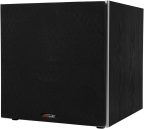
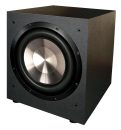
Yes, it’s possible to run a car subwoofer in a home audio setup. The main challenge is power — car audio runs on 12V DC, and your home uses 120V or 230V AC. Solve the power supply problem and the rest is straightforward.
What You Need
1. A 12V DC power supply — sized to your amplifier’s current draw. Your amp’s current draw in amps is approximately its wattage divided by 12. A 500W car amp draws roughly 40-45A at peak. You need a quality 12V DC power supply rated for that current. Brands like Astron, Mean Well, and Pyramid make suitable units.
2. The remote turn-on signal — car amps turn on via a 12V “remote” wire from the head unit. Connect this to a switched 12V output on the power supply, or use a 12V relay triggered by your audio signal.
3. RCA signal source — connect your receiver’s sub output to the car amp’s RCA inputs. Standard RCA, same as any home audio connection.
4. The car sub in its enclosure — the speaker in its box, connected via speaker wire to the amp’s output.
Setup Steps
- Get a 12V DC power supply rated for 20-30% more current than your amp’s maximum draw
- Connect the amp’s positive (red) and ground (black) power wires to the supply terminals
- Connect the amp’s remote wire to a switched +12V on the supply
- Run RCA from your receiver’s sub output to the amp’s RCA inputs
- Connect speaker wire from the amp to the sub driver
- Set the amp’s gain, crossover, and bass boost appropriately
Is It Worth It?
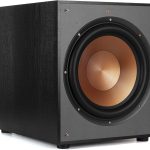
If you already have the car equipment sitting unused: yes, putting it to use costs only the power supply. If you’re buying everything new: usually not. A dedicated home powered subwoofer like the Klipsch R-120SW is a self-contained, purpose-built unit that requires one RCA cable and a power cord. The car-sub-at-home setup requires a power supply, separate amp, wiring, and more rack space.
The car equipment approach makes sense for: experimenting with equipment you already own, building a high-output custom setup, or getting more specific performance than equivalent-cost home subs deliver. For everyone else, purpose-built home subwoofers are simpler and usually better value.
One Practical Consideration
Car amps are designed with vehicle airflow in mind. In a home environment, ensure the amp has adequate ventilation — don’t stuff it in a tight cabinet. Car amps running in home use on sustained high-power can get warm. Monitor temperature during first use.