Tens of thousands of Amazon reviews. Average above 4.5 stars. Consistently recommended across audio forums. The R-120SW has earned its reputation — and having tested it in multiple setups, I understand why. But popularity doesn’t mean it’s right for everyone, so here’s an honest breakdown.
Quick Specs
- Driver: 12-inch spun-copper IMG woofer
- Amplifier: 200W RMS (400W peak)
- Enclosure: Ported
- Frequency response: 29-120Hz (-3dB)
- Crossover: 40-160Hz variable
- Weight: 26.8 lbs
First Thing You Notice: It Looks Good
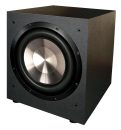
The copper IMG woofer is distinctive. It doesn’t look like a generic black box, which matters if this is going in your living room. The brushed black polymer cabinet is understated. At 26.8 lbs it feels substantial — this isn’t a hollow lightweight unit.
One thing to know: the port is rear-firing. Leave at least 6-8 inches clearance from the back wall. Block the port and you lose the extended bass that makes this sub competitive at the price.
Sound for Home Theater
This is the R-120SW’s strongest suit and the main reason people buy it. Action movies, sci-fi, superhero films — the Klipsch delivers that punchy, dynamic bass that makes blockbusters feel cinematic. LFE content hits with authority. The ported design’s efficiency means you get significant bass output without having to crank the receiver.
First time I set this up in a standard living room, the difference from no sub was immediately obvious. Not subtle. Obvious. That’s a good sign.
Sound for Music
Less of a standout. The ported character means bass is punchy and impactful but occasionally sounds slightly loose on music that demands tight, controlled low end — particularly acoustic genres. Hip-hop, EDM, pop, rock: all sound good. Acoustic jazz or classical music: a sealed sub would serve you better.
This isn’t really a criticism — it’s just an accurate description of what a ported design does. The R-120SW is optimized for impact, not analytical precision.
Setup
One RCA cable, a crossover adjustment, phase switch, gain dial. No app, no Bluetooth, no DSP beyond the physical controls. Everything is on the rear panel and you’ll need to get up and adjust manually. Fine, but it’s less convenient than the SVS app-equipped alternatives when you’re trying to dial things in precisely.
The Value Argument
At this delivers home theater performance that, three or four years ago, would have cost twice as much. The competition at this price point — the BIC F12, Polk PSW12, Monoprice equivalents — is real, but the Klipsch wins on build quality and overall refinement. It’s worth the modest premium over budget alternatives.
Who Should Buy It
- Home theater enthusiasts on a $200-300 budget
- Buyers who want proven, popular, safe choice
- Klipsch speaker system owners (synergy matters)
- Anyone who watches a lot of action movies and wants impactful bass
Who Should Look Elsewhere
- Music listeners who want analytical accuracy — consider a sealed sub
- Apartment dwellers — ported designs transmit more structure-borne vibration
- Anyone who wants app control and advanced EQ — look at SVS
Rating: 8.5/10 — Outstanding value for home theater. Not the most refined sub on the market, but consistently delivers on its promise at an accessible price.