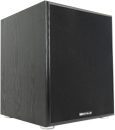
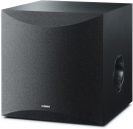
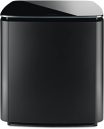
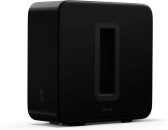
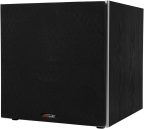
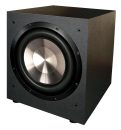
Yes, you can put a subwoofer on carpet. The performance difference versus a hard floor is minor — typically less than 1-2dB at the listening position, easily compensated by adjusting the gain slightly. Don’t let carpet stop you from placing the sub where the room acoustics say it should be.
What Carpet Actually Does
A hard floor (hardwood, tile, concrete) couples tightly with the sub’s cabinet, using the floor as an acoustic boundary to reinforce bass output. Carpet absorbs a small amount of this coupling. The practical effect is a slight reduction in bass output — much less than most people assume, and well within the range of the gain control to compensate.
There’s a secondary effect that’s actually useful: carpet acts as mild vibration isolation, slightly reducing bass transmission through the floor to downstairs areas. For apartment dwellers, carpet under the sub is a minor bonus, not a drawback.
When Carpet Causes a Real Problem
Two specific situations where carpet genuinely matters:
Downward-firing subwoofers: Some subs fire the driver down toward the floor. On thick, soft carpet, the carpet absorbs a meaningful amount of the output that would otherwise bounce off a hard floor. A rigid platform under a downward-firing sub on carpet recovers most of this.
Bottom-mounted ports: Some ported subs have the port on the bottom of the cabinet. Thick carpet can partially block the port, restricting airflow and affecting bass character. Again, a rigid platform solves this.
The Fix: A Platform
A piece of 3/4-inch MDF board under the sub is all you need. Cut to match the sub’s footprint or slightly larger. It creates a hard surface for the sub to sit on, restoring proper coupling, elevating any bottom-mounted ports, and adding stability on plush carpet. Costs a few dollars from any lumber yard. Does the job perfectly.
Stability
The more practical concern with carpet is stability. Sub feet (usually small rubber pucks) can sink into thick carpet, causing the cabinet to tilt or wobble. The MDF platform addresses this too. On very thick pile carpet, carpet spikes — metal points that pierce the carpet and contact the hard floor beneath — are another option commonly used in home audio installations.
Bottom Line
Carpet: fine. Thick carpet with a downward-firing sub or bottom-mounted port: use a platform. For all other cases, use the subwoofer crawl to find the optimal room position for acoustics, put the sub there regardless of what the floor is, and adjust the gain up slightly if needed. The carpet is not the problem.