Bigger is not better in a small room. I’ve set up many small-room audio systems and the pattern is consistent: an oversized sub in a compact space produces boomy, one-note bass that overwhelms rather than supports the music or movie. The right approach is to match the sub’s output capability to the volume of the room.
What “Small Room” Means Here
Under 200 square feet — bedrooms, home offices, small apartments, studio rooms. These spaces have limited volume to fill and are acoustically challenging because bass frequencies bounce back quickly from nearby walls, creating strong room modes.
Top Picks
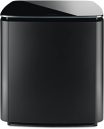
KEF Kube 8b — Best Overall for Small Rooms
Eight inches, sealed, DSP-assisted bass extension, compact cube that sits anywhere. This is what I’d choose for a small listening room where both music and movies are important. KEF’s engineering makes it perform like a 10-inch in a small room without overwhelming it. Precise, controlled, musical — exactly what you want when the room doesn’t give you much acoustic space to work with.
Audioengine S8 — Best for Desk/Near-Field
The S8 is designed for small spaces — particularly computer audio and desktop setups. 8-inch sealed driver, 120W, elegant design that doesn’t look like a home theater sub. For someone listening at a desk or in a small bedroom, the S8 provides musical, accurate bass that integrates naturally. A premium choice for premium desktop audio systems.
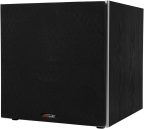
Polk Audio PSW10 — Best Budget Small Room
Ten inches, modest output, neutral character. In a small room this is the sensible budget pick. You get real bass improvement without the output that causes problems in tight spaces. Simple, reliable, doesn’t try to do more than the room can handle.
Small Room Setup Tips
- Start with lower gain than you think you need. Small rooms naturally amplify bass due to boundary reinforcement. The gain on a small room sub often needs to be lower, not higher, than equivalent setups in larger rooms.
- Avoid corner placement in very small rooms. Corner placement doubles bass output from boundary reinforcement — too much in a tight space. Try the middle of the front wall instead, or use the crawl method to find the position that sounds most even.
- Use EQ if available. Small rooms almost always have one or two dominant room mode peaks. EQ them out for cleaner bass. If your sub has app control (SVS) or your receiver has parametric EQ, use it.
- Raise the crossover if needed. Setting crossover at 100-120Hz instead of 80Hz can help in small rooms where the sub and room boundaries interact strongly at lower frequencies.
When You Should NOT Get a Subwoofer
If your room is under about 100 square feet — a very small bedroom or studio — even a compact sub at modest volume can create bass problems that are hard to manage without significant acoustic treatment. In that situation, quality headphones for critical listening or money spent on room treatment might be a better investment than a sub.