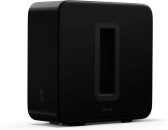
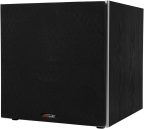
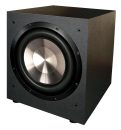
Adding a second subwoofer is one of the most consistently satisfying upgrades in home audio. The reason isn’t what most people think — it’s not primarily about more bass. It’s about even bass. Everywhere in the room, not just the sweet spot.
Why One Sub Creates Problems
Any single subwoofer in any room creates acoustic standing waves — room modes — at specific frequencies. These cause bass to be dramatically louder at some positions and noticeably quieter at others. The person in the left seat of your couch might get excellent bass; move to the right seat and it sounds thin. This is physics, not a hardware problem. Room modes can be improved with placement and EQ but never fully eliminated with a single sub.
Why Two Subs Fix It
Two subs placed asymmetrically excite different sets of room modes. They partially cancel each other’s modal peaks and dips. The result: substantially more even bass distribution across the entire room. People sitting anywhere in the room get good bass — not just the person in the acoustic sweet spot. This has been demonstrated in acoustic research repeatedly and I’ve verified it in my own setups consistently.
The Best Placement: Opposite Corners
Sub 1: front-left corner. Sub 2: rear-right corner. This asymmetric diagonal placement provides maximum modal smoothing. Both subs are as far apart as physically possible, and they address different resonant modes in the room. In my experience this is the single most effective dual-sub configuration for even bass distribution.
Alternative: Front Wall Pair
Sub 1: front-left of TV wall. Sub 2: front-right of TV wall. Less effective at modal smoothing than diagonal placement, but more practical for many room configurations and still significantly better than a single sub. Note: this is mirror-image placement, which is less effective acoustically than asymmetric — but it’s still a meaningful improvement over one sub.
Connecting Two Subs
Single sub output on receiver: Use a Y-splitter (one RCA female to two RCA males) to split the signal to both subs. Both receive identical signal.
Dual sub outputs (some higher-end receivers): Connect each sub to its own output. Some receivers allow independent level control per sub output — useful for fine calibration.
Calibration
- Run your receiver’s room correction with both subs connected — Audyssey, YPAO, and most modern systems handle dual subs automatically
- After calibration, check that both subs are at similar levels from the primary listening position
- Walk around the room during bass music — bass should be noticeably more consistent across seating positions than with a single sub
- If one sub sounds significantly louder than the other from your primary seat, adjust its individual gain slightly
Do the Subs Need to Match?
Ideally yes — same brand and model makes calibration simpler and the result more consistent. But two different subs can work if their outputs and characters are reasonably matched. The goal is both subs producing similar output at similar frequencies from the listening position. Mismatched subs with different sensitivities or bass characters can create unevenness at the crossover frequency rather than fixing it.
Cost: Two Mid-Range Beats One Expensive
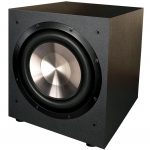
Two BIC America F12 units at total outperform a single $500 sub for room-wide bass evenness. Two Klipsch R-120SW at total beat a single $800 unit on distribution. The two-sub advantage in room coverage is significant enough that it should factor into your budget planning from the start.