People ask this in two different ways. Sometimes they’re asking what frequency their crossover should be set to. Sometimes they’re asking what frequency range makes bass sound the way they want. Both questions have useful answers — so let me cover both.
The Bass Frequency Map
| Range | Name | What It Feels Like | What’s In It |
|---|---|---|---|
| 20-40Hz | Sub-bass | Felt in your chest and seat, barely heard | Pipe organ, synth bass, movie LFE, 808 kicks |
| 40-80Hz | Deep bass | Rich, full, weighted | Bass guitar root notes, low kick drum |
| 80-150Hz | Upper bass | Punch and impact | Kick drum body, bass guitar harmonics |
| 150-300Hz | Low midrange | Warmth, body | Male vocals, lower brass |
What Hz Should I Set My Crossover To?
This is where most people are confused. The crossover setting tells your receiver where to split frequencies between the main speakers and the sub. There’s no single correct answer — it depends on your main speakers.
The rule: set the crossover at or slightly above where your speakers start rolling off.
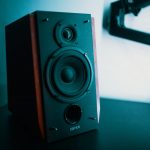
- Small bookshelf speakers (4-5 inch woofer): 100-120Hz
- Medium bookshelf (6-6.5 inch): 80-100Hz
- Large bookshelf or small floor-standers: 80Hz
- Large floor-standers: 60-80Hz
- Soundbars: 100-120Hz
If you’re not sure where your speakers roll off, start at 80Hz. That’s the THX reference standard and it works for most setups.
What About the Sub’s Own Crossover Knob?
If you have a home theater receiver with bass management, set the sub’s crossover knob to maximum (bypassed) and let the receiver handle it. Receiver crossovers are generally better quality and integrate properly with room correction. The sub’s knob is only needed when connecting to a stereo amp without bass management.
What Hz Makes Bass Sound the Way I Want?
This is about tuning to taste.
Want more physical impact and depth (hip-hop, movies)? You want strong output between 30-60Hz. Make sure your sub genuinely extends there — check the -3dB spec, not just the frequency range claim.
Want tight, punchy kick drum impact? Focus on 60-100Hz. A sealed sub handles this range cleanly.
Want both? The SVS PB-1000 Pro extends deep and outputs strongly across the full bass range. The Klipsch R-120SW is stronger in the 40-80Hz range than below it but covers the most impactful part of the spectrum well for the price.
The 20Hz Question
A lot of subs claim to reach 20Hz. Some really do. Most don’t — at least not with useful output. The spec is measured at -3dB, sometimes at -10dB, and what that means in a real room varies considerably.
Genuine 20Hz performance at room-pressurizing levels costs real money. The SVS SB-1000 Pro gets there. Below that price, real performance typically starts rolling off around 28-35Hz. That’s still good — the most impactful bass content in most music and movies sits between 30-80Hz.
EQ and Room Modes
Your room creates peaks and dips at specific bass frequencies — called room modes. A frequency that measures flat from the sub might sound boomy and overwhelming at your listening position because of a room mode amplifying it. This is why good bass isn’t just about the sub — it’s about the sub in your specific room.
If certain bass notes sound obviously louder than others (one-note bass), that’s a room mode. The fix is EQ (if your sub or receiver supports it) and/or sub placement adjustment. The subwoofer crawl helps identify the best position to minimize this.