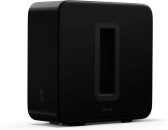
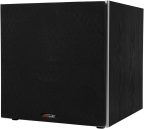
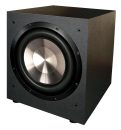
Active (powered) subwoofers are so dominant in home audio that this question barely comes up for most buyers. But if you’re building a custom setup, working in car audio, or considering professional equipment, understanding the difference matters.
Active (Powered) Subwoofer
Has a built-in amplifier. Self-contained: driver, enclosure, and amp in one unit. Connect via RCA cable to your receiver’s sub output and plug into mains power. Done.
Why it dominates home audio: The manufacturer matches the amp to the specific driver and enclosure. The crossover is integrated. Protection circuits are built in. DSP (on premium models) is calibrated for the system. Everything works together out of the box.
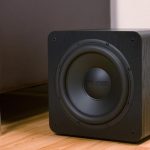
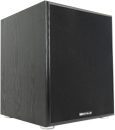
Examples: Klipsch R-120SW, SVS SB-1000 Pro — essentially all consumer home subwoofers.
Passive Subwoofer
Just the driver and enclosure — no built-in amplifier. Requires a separate external amplifier to drive it. Common in car audio (where the car amp is a separate component) and professional audio applications.
When passive makes sense:
- Car audio — separate monoblock amps are standard practice
- You already have a high-quality separate amplifier you want to use
- Professional PA systems where head units and amplifiers are separate components
- Custom high-end home installations with external subwoofer amplifiers
When it doesn’t make sense: For most home audio buyers, passive adds complexity without meaningful benefit. You need to choose a compatible amp, match impedances, add another piece of equipment to the rack, and manage the crossover separately. The integrated active sub does all of this for you.
Does Passive Sound Better?
Not inherently. Sound quality depends on the quality of the driver, the enclosure, and the amplifier — not on whether they’re in one box or separate boxes. A high-quality active sub with a well-designed integrated amplifier will outperform a passive driver connected to a mediocre external amp. The configuration is less important than the quality of each component.
At very high price levels (above $2,000 for the amp alone), there can be arguments for using a premium separate amplifier with a passive driver. Below that threshold, a well-designed active sub is almost always the better choice.
The Practical Recommendation
For virtually every home audio buyer: buy an active subwoofer. It’s simpler, optimised as a complete system, easier to calibrate, and produces better results at equivalent price points than a passive driver plus a separate amp of similar total cost. The Klipsch R-120SW and SVS SB-1000 Pro are the standard recommendations — both active, both excellent.