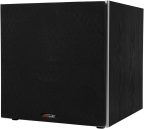
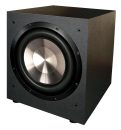
New subwoofer owners often hear about break-in and wonder whether it’s real or audio mythology. The honest answer: there is a real physical basis for break-in, but the effect is modest and you shouldn’t obsess over it.
What Break-In Actually Is
A brand new subwoofer driver has a suspension — the spider (the corrugated fabric disc inside the magnet) and the surround (the ring connecting the cone edge to the basket). When the driver is new, these components are slightly stiffer than they’ll be after use. As the sub plays and the cone moves back and forth repeatedly, the suspension materials flex and loosen, settling into a more compliant state.
This change in mechanical compliance affects measurable parameters like resonant frequency (Fs) and Q — typically small shifts, but real ones.
Does It Change the Sound?
In most cases: very slightly, and usually in a direction that’s subjectively positive — bass may sound marginally deeper or more open after 20-40 hours of use. Whether this change is audibly significant in typical listening conditions is debated, and controlled ABX tests make it genuinely difficult to confirm reliably.
The truth: for most quality subwoofers from brands like SVS or Klipsch, the driver is voiced to sound good from the moment it’s installed. Any break-in effect is incremental, not dramatic.
How to Break In If You Want To
This is perfectly sensible — just don’t make it a stressful production:
- Play the sub at moderate volume (not maximum) for the first 20-40 hours of use
- Use varied bass-heavy content — music across different genres, movies, whatever you’d normally play
- Avoid sustained single-frequency test tones at maximum volume — this can generate excessive heat without the natural dynamic variation of music
- Normal daily use at reasonable volume accomplishes the same thing without any deliberate procedure
What NOT to Do During Break-In
- Don’t play at maximum volume for extended periods — new suspensions are stiffer and stress at extreme excursion more than a broken-in driver
- Don’t obsessively test every few hours — you won’t hear a meaningful difference in that timeframe
- Don’t delay enjoying your sub — play it, listen to music, watch movies. That’s break-in.
The Car Audio Exception
Break-in is discussed more seriously in car audio, particularly for high-excursion competition drivers. These drivers often have quite stiff suspensions from the factory, and the improvement with break-in can be more pronounced. For car audio — particularly high-performance drivers — a deliberate break-in procedure at moderate volume is more worth the effort than for typical home subs.
Bottom Line
Break-in is real but modest. Play your new sub normally at reasonable volume for the first few weeks. That’s the break-in procedure. Anything beyond that is optional and unlikely to produce noticeable results.