One is fine for most people. Two is noticeably better for most rooms. More than two is for specific large-space applications. Here’s the actual reasoning.
Why One Sub Has a Problem
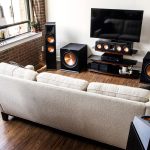
A single subwoofer in any room creates acoustic standing waves — room modes — at specific bass frequencies. These modes cause bass to be dramatically louder at some positions in the room and noticeably quieter at others. The person in your couch’s left seat might be getting excellent bass while the person on the right hears something thin and disappointing. This is a physics problem, not a hardware problem.
You can partly address this with sub placement (the crawl method) and EQ. But you can never fully eliminate room modes with a single sub.
Why Two Subs Fix It
Two subs placed asymmetrically excite different sets of room modes — and they partially cancel each other out. The result: much more even bass across every seating position. The person in the worst seat still gets good bass, not just the person in the sweet spot.
This has been demonstrated conclusively in acoustic research, and I’ve verified it in my own setups. The improvement isn’t subtle. It’s immediately noticeable to everyone in the room.
Best Placement for Two Subs
Opposite corners (front-left and rear-right): The most effective configuration for even bass distribution. Asymmetric placement is key — mirror-image placement (front-left and front-right) is less effective because both subs excite the same room modes.
Read the full setup details in my dual subwoofer placement guide.
Does Two Mean Twice the Cost?
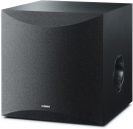
Not necessarily. Two BIC America F12 units at total outperform a single $500 sub for room-wide bass evenness. Two Klipsch R-120SW units at total beat a single $800 sub on distribution. The two-sub advantage is real enough that it’s worth reconsidering your budget if you’re choosing between one expensive sub and two mid-range ones.
When to Stay with One Sub
- Small room with a single primary listening position
- Apartment where maximum bass output isn’t the goal
- Budget genuinely doesn’t allow for two
- Physical space is too tight for two enclosures
In these cases, one well-placed sub with proper setup is completely satisfying. Don’t feel like you’re missing out if two subs isn’t practical right now.
What About Three or Four?
Four subs at the midpoints of each wall (front, rear, left, right) produces near-perfectly even bass throughout any room. This is the configuration used in some high-end dedicated home theaters. For most people it’s overkill — two subs get you 80% of the evenness improvement for far less complexity and cost.
The Quick Answer
One sub for most setups. Two if you have multiple seating positions, a larger room, or bass evenness matters to you. Same brand and model for simplicity. Asymmetric placement for maximum effectiveness.