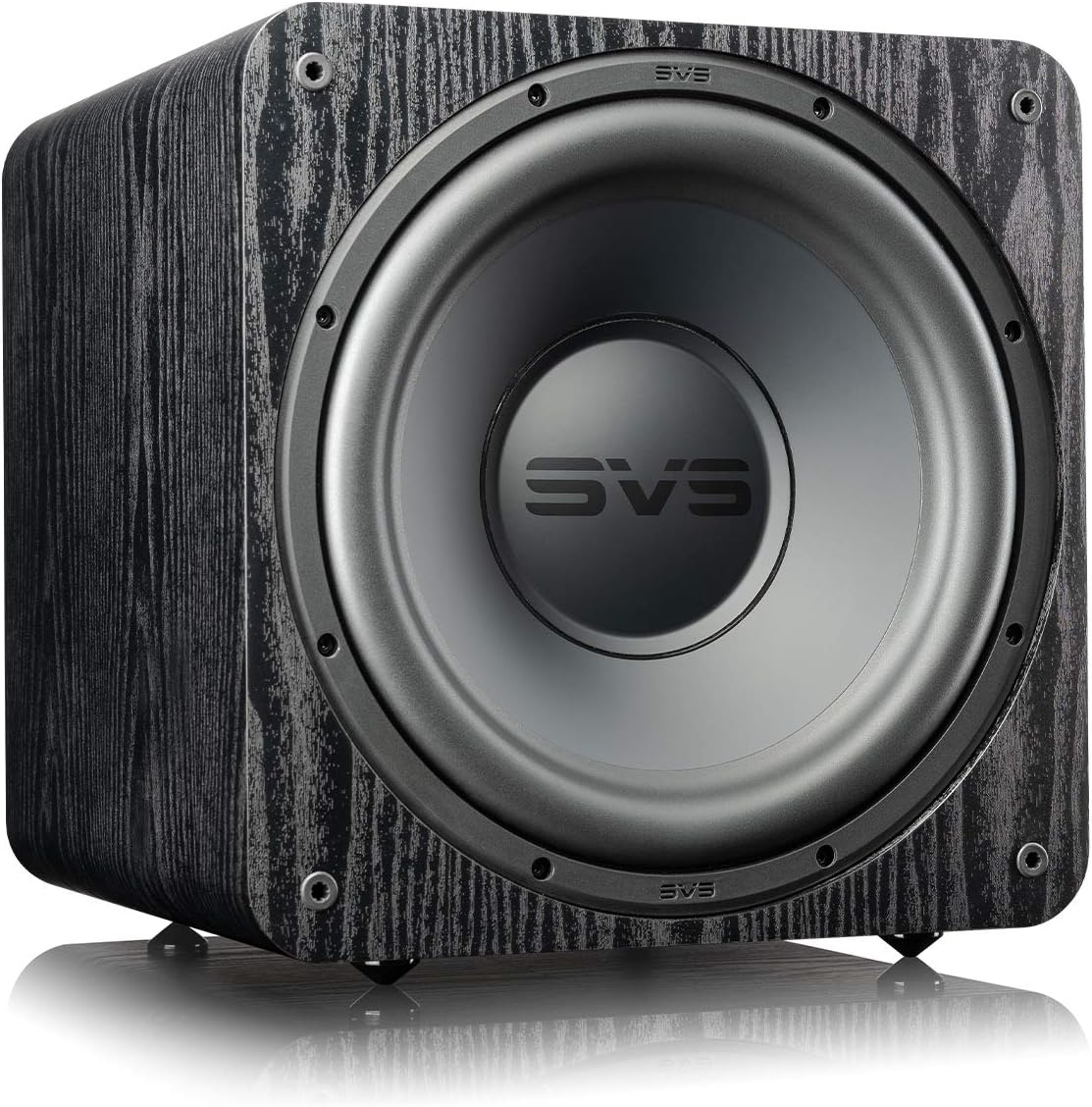
The box a subwoofer driver sits in isn’t just packaging — it’s an integral part of the acoustic design. Change the enclosure type and you fundamentally change how the sub sounds. Here’s what you need to know about each type.
Sealed (Acoustic Suspension)
A completely closed box. The air trapped inside acts as a spring that controls cone movement.
Sound character: Tight, accurate, fast. Notes start and stop cleanly. The “right” choice for music where precision matters more than maximum depth or output.
Rolloff: Gradual — 12dB per octave below the resonant frequency. The bass doesn’t fall off a cliff; it tapers gently. This is forgiving of room acoustics and makes sealed subs easier to integrate in challenging spaces.
Trade-off: Less efficient than ported. Requires more amplifier power for the same output level.
Best example: SVS SB-1000 Pro
Ported (Bass Reflex)
A box with a tuned port (tube or slot) that allows air movement in and out. At the port’s tuning frequency, the port itself produces significant output — effectively acting as a second driver.
Sound character: Louder, deeper, more impactful. The ported boost makes movies and bass-heavy music more dramatic.
Rolloff: Steep — 24dB per octave below port tuning frequency. Below the tuning point, output drops sharply and driver protection becomes critical. Don’t push a ported sub hard below its tuning frequency.
Trade-off: Slightly less tight transient response. Port noise (chuffing) possible at very high volumes. Larger enclosure needed than equivalent sealed design.
Best example: Klipsch R-120SW
Passive Radiator
Uses a second, unpowered cone (the passive radiator) instead of a port. Acts like a ported design — extended bass and higher output — but without the port noise associated with ported enclosures at high volumes.
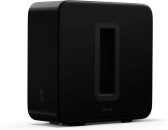
When to choose it: When you want ported-like performance without port noise at high volumes. Common in quality compact subs. The Sonos Sub uses passive radiators.
Bandpass
The driver fires into a sealed chamber; bass exits only through a port in a second ported chamber. Creates very high output within a specific frequency band, with steep rolloff outside that band.
When to choose it: Maximum SPL within a specific range. Common in car audio competition builds. Not suitable for music listening — too colored and frequency-limited for accurate reproduction.
Which Should You Choose?
| If you primarily… | Choose |
|---|---|
| Listen to music (jazz, classical, acoustic) | Sealed |
| Watch action movies | Ported |
| Listen to hip-hop, EDM | Ported or high-powered sealed |
| Both movies and music, balanced | Sealed (more versatile) |
| Small apartment, want controlled bass | Sealed |
| Want maximum output at any cost | Ported or bandpass |