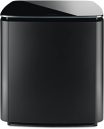
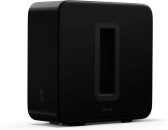
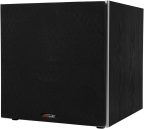
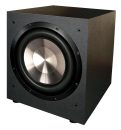
People use these terms interchangeably sometimes. They’re not the same thing, and understanding the difference helps explain why a system with both almost always sounds better than one without a dedicated sub.
What a Speaker Does
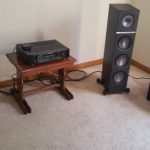
A conventional speaker — bookshelf, floor-standing, center channel — is designed to reproduce a broad range of frequencies. A typical bookshelf speaker might cover from 60Hz up to 20,000Hz. It’s a generalist. It handles voices, guitars, cymbals, and bass guitar all from the same driver array.
The limitation: producing deep bass requires moving a lot of air, which requires a large cone moving a significant distance. A compact bookshelf speaker physically can’t do this — the cabinet is too small and the woofer too modest. So it produces what it can and rolls off below its design limits.
What a Subwoofer Does
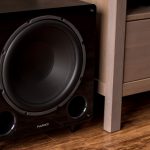
A subwoofer is a specialist. It does one thing: reproduce the lowest bass frequencies (typically 20-120Hz) with authority. A large driver, a purpose-built enclosure, and a powerful dedicated amplifier all optimised for this one task. It can’t reproduce voices or melody — it handles only the frequencies your main speakers can’t.
Why You Generally Need Both
Together they cover the complete frequency spectrum from 20Hz to 20,000Hz. Separately, each covers part of it. The sub handles what the speakers can’t, and the speakers handle what the sub won’t. That’s the system.
An important side effect: when you add a sub and configure your receiver to redirect bass below 80Hz to it, your main speakers are relieved of a job they were doing poorly. They produce cleaner midrange with less strain and distortion. The imaging — how precisely instruments and voices are placed in the soundstage — often improves noticeably.
What About Large Floor-Standing Speakers?
Good question. Large floor-standers with 8-10 inch woofers do produce meaningful bass — sometimes down to 35-40Hz. But even these struggle below 30Hz at real output levels. And a dedicated sub still handles that range more efficiently, allowing the amp to focus on the midrange and treble through the main speakers. Even with high-end floor-standers, a sub often improves the system.
The exception: genuinely large floor-standers in smaller rooms where adding a sub would create boomy, over-bassed sound. In that case — stay with the speakers alone, at least until you have a better-matched room.
Frequency Ranges at a Glance
| Type | Typical Range | What It Covers |
|---|---|---|
| Small bookshelf | 80-20,000Hz | Midrange + treble, limited bass |
| Large bookshelf | 60-20,000Hz | Better bass, still limited below 60Hz |
| Floor-stander | 35-20,000Hz | Good bass, still limited at extremes |
| Subwoofer | 20-120Hz | Deep bass only |
| Combined system | 20-20,000Hz | Everything |
The Practical Recommendation
A pair of quality bookshelf speakers plus a dedicated sub at the same total budget almost always beats floor-standing speakers alone. The bookshelf speakers optimise for midrange and treble. The sub handles bass better than any floor-stander at equivalent cost. The crossover does the work of splitting them cleanly.
The Klipsch R-120SW pairs well with bookshelf speakers at almost any price point. For more music-focused pairings, the SVS SB-1000 Pro integrates more naturally.