This is the comparison I get asked about more than any other. Both brands make excellent subs. Both are popular recommendations online. But they’re optimized for different things, and buying the wrong one for your situation is a genuinely frustrating experience.
I’ve tested multiple models from each brand. Here’s my honest take.
The Core Difference in One Sentence
Klipsch makes exciting, efficient, punchy bass. SVS makes accurate, controlled, deep bass with better build quality and app control. Neither is universally better — it depends entirely on what you’re doing with it.
Klipsch: What It’s Actually Good At
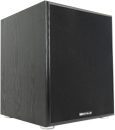
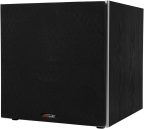
Klipsch subwoofers are ported designs with high-efficiency drivers. The R-120SW, their most popular model, delivers bass that’s immediately impressive — it hits hard, it’s dynamic, and it sounds dramatic in a way that makes movies exciting.
There’s a reason it’s consistently one of the bestselling subs on Amazon. For home theater use — action movies, sci-fi, anything with explosions and LFE content — it delivers a satisfying experience at a price that makes it accessible to most people.
Where it shows its limits: music that requires accuracy. Jazz double bass, acoustic music, orchestral recordings — the ported character can sound slightly loose compared to a sealed design. Not unpleasant, just less precise.
Best Klipsch pick: Klipsch R-120SW
SVS: What It’s Actually Good At
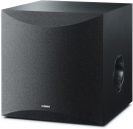
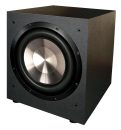
SVS builds subwoofers with serious engineering behind them. They’re a direct-to-consumer brand — no retail markup — and they put that money into better drivers, better amplifiers, and better DSP. The SB-1000 Pro I tested extends to a genuine 20Hz in-room. That’s rare below $600.
The SVS app is legitimately useful. Being able to adjust the crossover, EQ, and volume from your listening position via Bluetooth produces better results than manually tweaking rear-panel knobs. I’ve set up dozens of systems and app-controlled setup is always more accurate.
The sealed design means notes start and stop cleanly. For music listening — any genre — that accuracy is noticeable and appreciated. For movies it’s capable but less dramatic-feeling than an equivalently powered Klipsch.
Best SVS pick: SVS SB-1000 Pro
Head to Head: The Key Differences
| Klipsch R-120SW | SVS SB-1000 Pro | |
|---|---|---|
| Price | Check Amazon | Check Amazon |
| Type | Ported | Sealed |
| Power (RMS) | 200W | 325W |
| App control | No | Yes |
| Bass character | Punchy, exciting | Accurate, controlled |
| Best for | Home theater, movies | Music, precision setups |
| Warranty | 2 years | 5 years |
| Return policy | Standard retailer | 45-day home trial |
The Honest Value Question
The SVS costs twice as much. Is it twice as good? No. Is it noticeably better? Yes — particularly for music and for anyone who wants to dial things in properly with the app. The quality gap is real. Whether it’s worth the premium depends on your priorities and what you’re using it for.
My honest take: if movies are 80% of what you do with it and budget matters, get the Klipsch. If you care about music or you’re building a system you want to be proud of long-term, save up for the SVS. You won’t regret either decision made with that logic.
What About the Rest of the SVS and Klipsch Lineup?
SVS also makes ported designs (the PB series) that deliver the impact of Klipsch with SVS’s engineering quality. If you want the best of both worlds and have $500 to spend, the SVS PB-1000 Pro is worth serious consideration. Same Sledge amplifier and app as the SB-1000 Pro, but ported for more output.
Klipsch has higher-end models in the SPL series, but at that price point SVS becomes more competitive. The Klipsch value proposition is strongest at the R-series price point.
Quick Verdict
Buy Klipsch if: budget is under $350, you mainly watch movies, you want maximum impact per dollar.
Buy SVS if: music matters, budget reaches $500, you want app control and a better warranty.
Either way — you’ll hear a clear improvement over no subwoofer. That’s what actually matters.