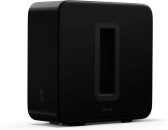
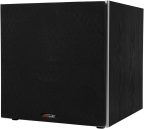
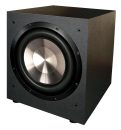
I’ve moved subwoofers around in hundreds of rooms over 20 years. The single most underrated improvement you can make to your bass isn’t buying a better sub — it’s positioning the one you already have correctly. A poorly placed $800 sub sounds worse than a well-placed $200 one. That’s not an exaggeration.
The Subwoofer Crawl — Do This First, Every Time
This is the technique I use in every professional installation. It works, and it takes about 5 minutes.
- Put your subwoofer at your normal listening position — on the couch or chair where you sit.
- Play music with steady, consistent bass. A bass test tone from YouTube works well.
- Slowly crawl around the perimeter of the room at ear level while the music plays.
- Find the spot where bass sounds clearest, most defined, and most even. No boom, no thin spots.
- That’s where you put the sub.
The reason this works: bass behaves the same whether you’re the source or the listener. Where you hear the best bass from your couch, the sub will produce the best bass from that position.
Where Most People Put Their Sub (And Whether It Works)
Front Wall — Usually the Right Call
Along the front wall near your TV is the most common placement, and it works well in most rooms. It keeps the bass source in roughly the same direction as your speakers, which helps with integration. This is my default starting point for any new setup. Start here before trying anything else.
Front Corner — More Output, Possible Boom
Corners boost bass output because of boundary reinforcement from two walls. If your sub feels underpowered for your room, try a front corner. The downside is that the bass can get exaggerated and boomy in some rooms. If that happens, turn the gain down a bit — the output boost from the corner compensates.
Side Wall, Front Half of Room — Works as a Backup
Sometimes the front wall isn’t practical. The side wall within the front half of the room is a reasonable alternative. Don’t go behind your seating position though — bass localization gets weird and you start hearing it coming from behind you during movies.
Behind Your Couch — Don’t Do This
Bass is largely omnidirectional below 80Hz, but your brain still picks up on directional cues near the crossover frequency. A sub behind you during action movies makes explosions sound like they’re happening behind you. That’s not immersive — it’s disorienting.
Floor vs. Elevated Placement
The floor wins. Always. The floor acts as an acoustic boundary that reinforces bass output — you essentially get free bass from the boundary loading effect. A sub on a shelf or table loses that advantage. If vibration transmission to downstairs neighbours is a concern, put an isolation pad (the Auralex SubDude is the standard one) under it rather than elevating it.
What Flooring Type Does to Your Bass
Hard floors (hardwood, tile, concrete) couple with the sub efficiently. Good. Carpet absorbs a little energy but the effect is minor — don’t let it stop you from putting the sub where the room acoustics say it should go. If you’re on thick carpet, a rigid platform under the sub helps.
Two Subwoofers
If you have two subs — or are thinking about getting a second one — placement matters even more. The best dual-sub configuration is asymmetric: one front-left, one rear-right. This placement smooths out room mode peaks and dips across the whole room, so everyone sitting anywhere gets good bass, not just the person in the sweet spot. Read more in my dual subwoofer setup guide.
After Placement: Fine-Tuning
Once you’ve found the right spot physically, set these in order:
- Phase: Switch between 0° and 180°, pick whichever sounds fuller from your seat.
- Crossover: Start at 80Hz. Adjust to match your speakers’ rolloff point.
- Gain: Start low (9 o’clock position). Increase until bass blends — not dominates.
The goal is for the sub to be invisible as a source. If you can hear it as a separate thing, the gain is too high or the placement needs work.
What NOT to Do
- Don’t put it in the center of a wall — that’s typically the worst acoustic position in any room.
- Don’t stuff it inside an entertainment cabinet. Kills output, causes heat buildup, and rattles everything.
- Don’t put it behind furniture where the port (if ported) is blocked.
Take 20 minutes with the crawl method and you’ll get more improvement than spending $200 on a sub upgrade. That’s the honest truth of it.