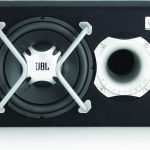
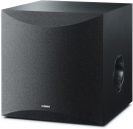
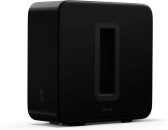
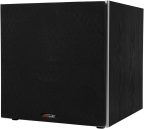
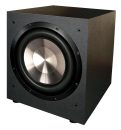
The rules for subwoofer placement with a soundbar are similar to those for a full speaker system, with one important additional consideration: the sub needs to feel like it’s coming from the same direction as the soundbar. Here’s what works.
Keep It in the Front Half of the Room
The most important rule. If the sub ends up behind your listening position, explosions in movies start sounding like they’re happening behind you rather than from the screen. That’s jarring and unnatural.
Front wall, front corners, or side wall within the front half of the room — all are good options. Rear placement isn’t.
Best Positions in Order
Front Wall, Near the TV — Try This First
Within a few feet of the TV and soundbar, placed to one side. This keeps bass and dialogue coming from roughly the same direction. For most setups, this produces the most seamless integration. When a character speaks and an explosion happens simultaneously, the bass and voice feel unified rather than coming from different places.
Front Corner
Either corner of the TV wall. Boundary reinforcement from two walls boosts bass output — useful if the soundbar’s built-in sub feels underpowered for your room. The trade-off is sometimes boomier bass. Turn the sub’s gain down a notch to compensate for the corner boost.
Side Wall, Front Third
When front wall placement isn’t practical. Keep it within the front third of the room’s length — closer to the TV side than the seating side. Works reasonably well for most content.
Using the Subwoofer Crawl
The crawl method works for soundbar setups too. Place the sub at your listening position, play bass-heavy movie content through the soundbar system, then crawl around the front half of the room listening for where bass sounds most natural and even. That’s your optimal position.
Crossover for Soundbar Use
Soundbars typically roll off their bass higher than full speakers — often above 100Hz. Set the sub’s crossover to 100-120Hz to fill the gap between what the soundbar handles and where the sub takes over. The typical 80Hz crossover used with full speaker systems is often too low for soundbar pairings.
Wireless Subs and Placement
The same rules apply to wireless subs (Sonos Sub, Samsung wireless subs). The wireless connection gives you more cable-free flexibility, but the acoustic placement principles are unchanged. Don’t use the wireless freedom as an excuse to put the sub in the worst acoustic position in the room just because the cable doesn’t reach the better location.
What the Sub Level Should Be
Soundbar-sub systems can go boomy easily, particularly in smaller rooms. Start with the sub level lower than you think and work upward. The soundbar’s limited midrange capability can make a prominent sub stand out as a separate sound source more easily than it would in a full speaker system. Blend it in — feel it, don’t hear it separately.