

Subwoofer Not Working? A Step-by-Step Fix
Subwoofer not working? Step-by-step fixes for no sound, auto-standby problems, ground loop hum, protection mode and buzzing, plus how to tell if it’s broken.
Placement, crossover, phase, EQ and troubleshooting guides to get clean, even bass from the subwoofer you already own.
Subwoofer not working? Step-by-step fixes for no sound, auto-standby problems, ground loop hum, protection mode and buzzing, plus how to tell if it’s broken.
How to test a subwoofer at home: function and signal checks, sweep tests for rattles and distortion, a safe cone check, integration tests and measuring.

How to EQ a subwoofer: room correction, app-based parametric EQ, and measuring with Room EQ Wizard. Why you should cut peaks rather than boost nulls.

Do you need one subwoofer or two? When a single sub is enough, why two give more even bass in multi-seat rooms, and when three or four make sense.
How to set up two subwoofers: why dual subs smooth out room bass, the best placements, how to connect them, calibration steps and whether they need to match.

How to set your subwoofer level: gain vs receiver trim, step-by-step calibration, signs it’s too loud or too quiet, and adjusting for movies vs music.

What subwoofer phase does, the difference between phase and polarity, and a simple two-minute method to set it for fuller, better-integrated bass.

How to set the frequency (LPF) dial on your subwoofer: maximum or LFE with a receiver, and matching your speakers’ roll-off with a stereo amp. Settings by speaker size.
Subwoofer crossover settings explained: why 80 Hz is the standard, what to choose for different speakers, receiver bass management steps and fine-tuning tips.
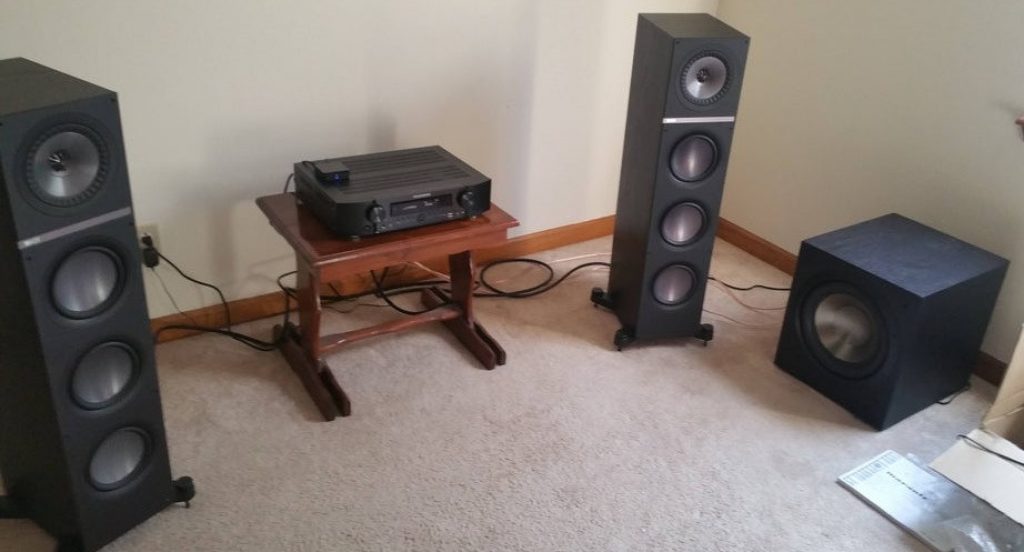
Where to put a subwoofer: how room modes work, the subwoofer crawl method, common positions compared, floor and carpet tips, and what to do after placement.